Review of B-PUMP Tokyo Akihabara Climbing Gym: Is It Worth Visiting?
Review of B-PUMP Tokyo Akihabara
Review of B-Pump Tokyo Akihabara —locally known as “Aki-B” — takes an in-depth look at one of Japan’s most iconic bouldering gyms. Featuring four distinct climbing floors and a rooftop area that allows climbers to enjoy climbing, B-PUMP Tokyo Akihabara has earned a reputation as a must visit destination for both local and international climbers seeking a taste of Japan’s unique climbing culture.
At Bouldering Master, we laced up our climbing shoes, chalked up, and headed to Akihabara to experience the facility firsthand. In this review of B-Pump Tokyo Akihabara, we’ll explore each floor of the gym, evaluate the route setting and grading, examine the atmosphere and facilities, breakdown the pricing, and determine whether this legendary climbing gym deserves a place on your Tokyo climbing itinerary.

What’s On the First Floor?
The moment you enter B-PUMP Tokyo Akihabara, you are welcomed by a well-stocked climbing shop featuring a wide variety of climbing merchandise. Whether you are looking for climbing shoes, chalk bags, crash pads, or other climbing essentials, the gym offers an impressive selection of equipment and accessories to choose from.
The first floor also features spacious changing rooms for both men and women, complete with lockers where climbers can securely store their valuables while climbing. In the event that an item is accidentally left behind, the gym maintains a lost and found service, and the staff are extremely helpful in assisting with retrieving misplaced belongings. During our review of B-PUMP Tokyo Akihabara, we accidentally left our AirPods in a locker, and we were able to recover them the following day without any issues.
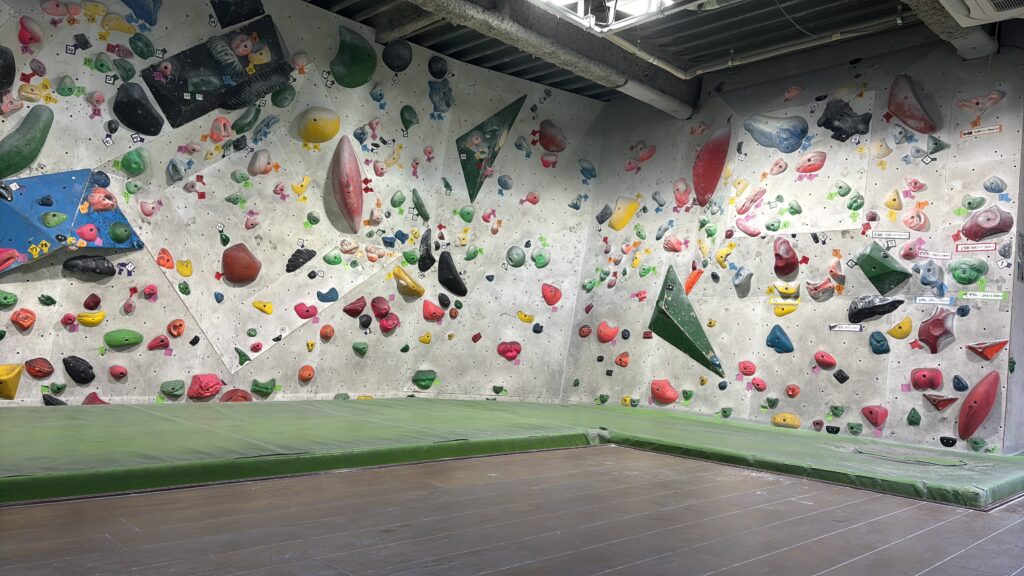
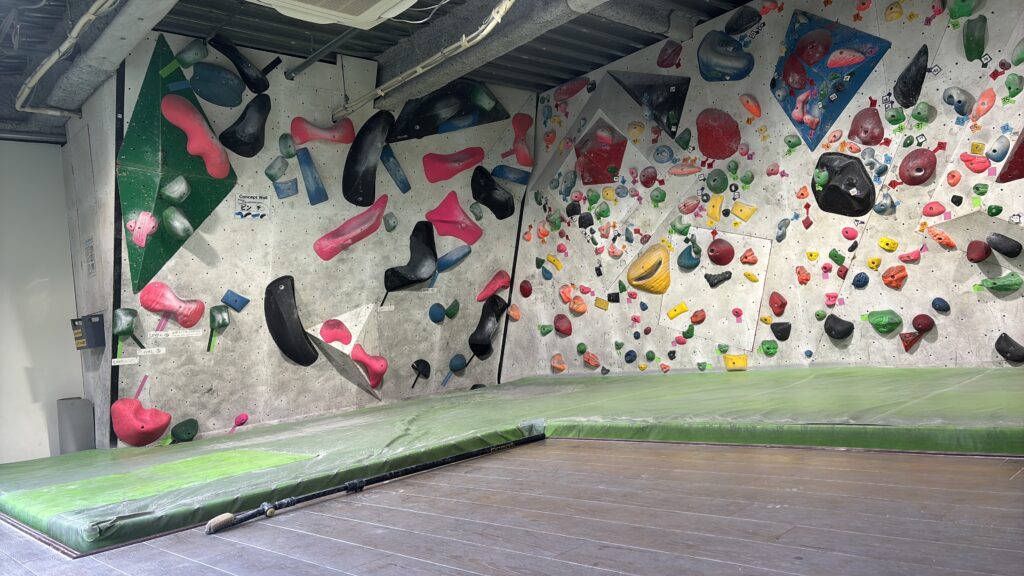
We set off to the climbing section of the gym for this review of B-PUMP Tokyo Akihabara to find that the first floor serves as an excellent introduction to the gym. It is an ideal area for warming up and primarily features beginner to lower-intermediate bouldering problems, with most routes ranging from V3 and below and very few exceeding V5. One particularly unique and beginner-friendly feature is the inclusion of QR codes on select routes. By scanning the code with your phone, you can access demonstrations and guidance on how to complete the problem, making the experience more approachable and interactive for newer climbers.
What’s On the Second Floor?
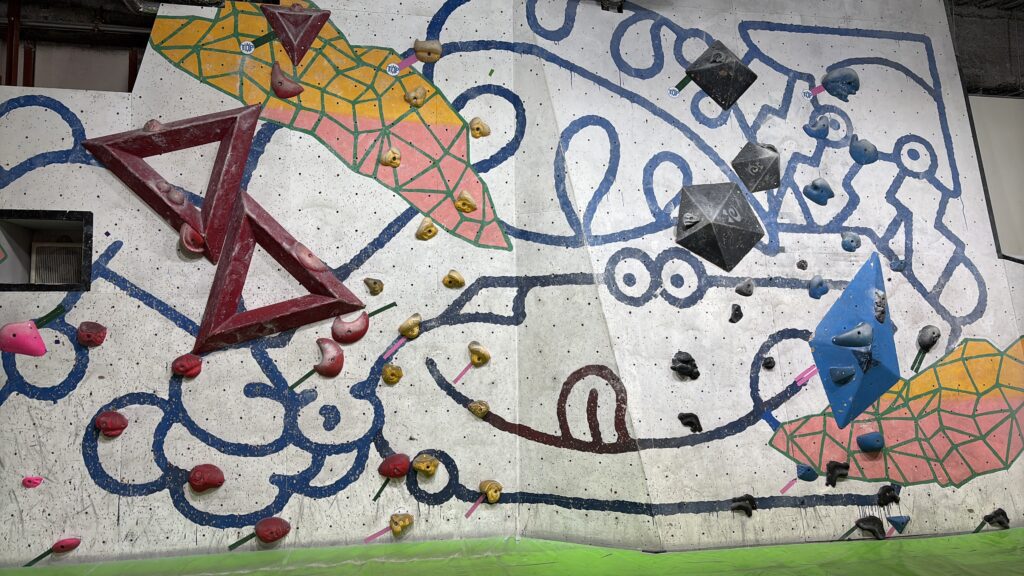
The second floor features a wider range of bouldering problems with more of a focus on higher graded problems. Climbers can find slabs, vertical walls, and moderately overhanging terrain. In the far back, visitors can find a pretty decent sized campus board for training.
Something fun and worth mentioning is that the second floor will sometimes feature “competition style” routes. This gym tends to leave the competition wall setup for a short period of time after they have a competition they hosted has finished. If you are lucky enough to visit this gym during this time, you can experience some tougher and more dynamic bouldering problems.
What’s On the Third Floor?
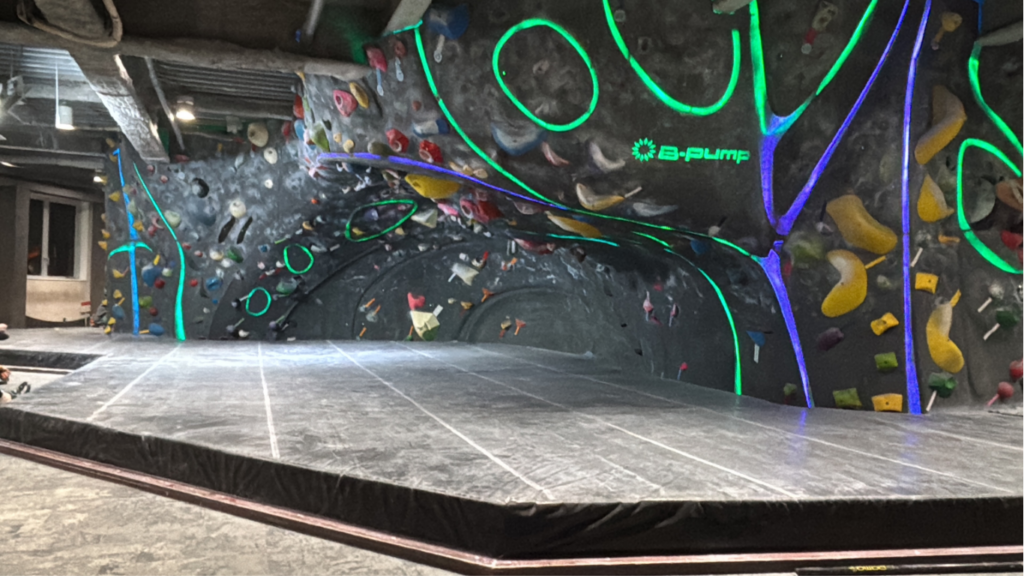
The third floor of this gym has a completely different personality from the rest of the gym. The moment you walk in, it feels more futuristic with dark textured climbing walls that light up. The lighting is relatively darker, the walls are packed with unusual volumes and angles, and the giant freestanding island in the center becomes the focal point of the entire floor.
Visitors can venture 360 degrees around this island, encountering various settings that tend to mix technical movement with powerful climbing. The wall shapes are highly varied, with steep overhangs, rounded bulges, compression features, and technical faces all packed closely together.
If you are also a slab person, and you all known who you are, there are some nice slabs in the back of this floor, featuring two slab walls with a variety of routes at differing degrees of difficulty.
What’s On the Fourth Floor?
The fourth floor is often considered B-PUMP Tokyo Akihabara’s crown jewel because it features the rooftop climbing area. On good weather days, this area is open for climbers to experience climbing outdoors. There is not much of a view of Tokyo, but if you are focused on the climbing, it is a great place to get some fresh air and enjoy climbing. In our review of B-PUMP Tokyo Akihabara, we definitely found this spot to be the highlight of our experience.
This floor also features an expansive continuous wall located inside. The wall stretches across the whole width of the building allowing for longer sequences, sustained movement, and endurance focused climbing. We found it a great place to cool down after climbing on the other floors.

Review of B-PUMP Tokyo Akihabara: Grading
In this review of B-PUMP Tokyo Akihabara, we take a look at the grading. If you are used to North America grading, you may feel the grading is a bit difficult. A problem graded at a certain level may feel one to three grades harder than a similarly rated problem in North America. This is not because the grades are necessarily inaccurate, but because the setting emphasizes:
- Precision
- Technique
- Body positioning
- Problem-solving
- Efficiency
Rather than focusing on the grade, we think it is better to treat B-PUMP as an opportunity to experience a different climbing culture and style.
Review of B-Pump Tokyo Akihabara: Costs
B-PUMP Tokyo Akihabara is not cheap for tourists who just want to test the gym while they are traveling around Japan. There is an initial registration fee for first time visitors, then the day pass or session fee. You can also choose to rent shoes, which is free on your first visit. Visitors cannot rent chalk and there is no communal chalk that may be found at other gyms. If you forgot your chalk at home, there is a store that sells these items.
Here is a breakdown of the cost at B-PUMP Tokyo Akihabara.
Review of B-PUMP Tokyo Akihabara: Is It Worth Visiting?
In this review of B-PUMP Tokyo Akihabara, we felt that this place is more than just a climbing gym—it is a destination. Each floor provides a distinct experience, allowing climbers to explore everything from technical slab climbing to powerful overhanging projects in a single facility. The different floors definitely are a great feature and worth checking out.
During our review of B-PUMP Tokyo Akihabara, we found the route setting really creative, technical and often memorable. It wasn’t as difficult as one of B-PUMP’s more famous location Ogikubo, but it did have some nice challenges that we enjoyed. At the time of our review of B-PUMP Tokyo Akihabara, it was also peak hours, so the gym was very crowded, which we would say is only a minor drawbacks compared to the quality of the route setting.
Overall, definitely a must stop spot if you live or are just traveling through Tokyo and want a taste of Japan’s climbing culture.