
Kinesiology Tape vs. Climbing Tape: What’s the Difference and When Should You Use Each?
If you’ve ever wondered what’s the difference between kinesiology tape vs climbing tape, you’re not alone. While both are commonly seen, especially among professional climbers, the difference between these two kinds of tape is not fully transparent.
Have you ever seen professional athletes wearing bright blues, pinks, and boldly patterned tape across their shoulders, elbow, and knees? This is known as kinesiology tape and is different from your familiar white climbing tape. Although they both may appear similar, kinesiology tape and climbing tape are designed for entirely different purposes. Choosing the wrong one can leave your skin unprotected, provide inadequate support for injury, or simply fail to do the job you intended.
In this guide, we’ll breakdown the key differences between kinesiology tape vs climbing tape, when to use each one, and the common mistakes climbers should avoid when using them.
Please Note: As an Amazon Associate, we earn from qualifying purchases. This means we may earn a commission if you click a link and make a purchase, at no extra cost to you.

What Is Climbing Tape?
Climbing tape, which is also referred to as finger tape, is non elastic cotton tape designed to protect the skin and provide structural support. The tape doesn’t stretch, which limits excessive movement and acts as a protective barrier between your skin and rock or climbing hold. It is most commonly used to:
- Protect flappers and splits
- Cover fresh skin to continue climbing
- Support finger pulleys after an injury
- Reinforce joints during recovery
- Reduce friction on damaged skin
Want to learn how to use climbing tape? Check out our article The Essential Role of Climbing Tape in a Climber’s Toolkit
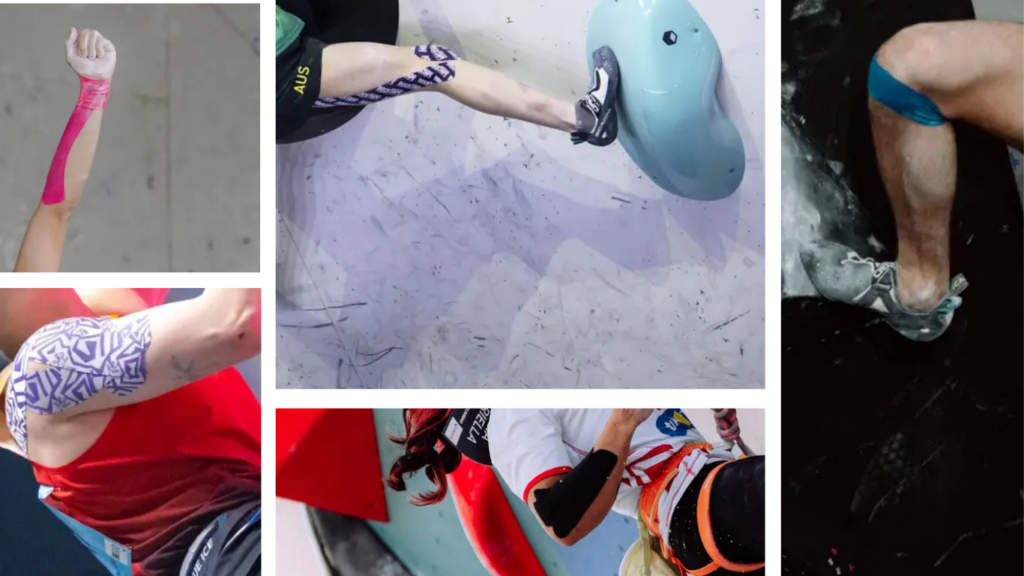
What Is Kinesiology Tape?
Kinesiology tape, which is often called KT tape, is an elastic cotton tape designed to move with your body. It isn’t designed to immobilize a joint, but instead, stretches with your muscles and skin to allow a full range of motion. It is used by athletes to reduce discomfort (especially if they are recovering from an injury), improve body awareness, and support muscles during physical activity. Climbers commonly apply kinesiology tape to:
- Shoulders
- Elbows
- Wrists
- Knees
- Lower back
- Forearms
Want to learn how to use kinesiology tape? Check out this video KT TAPE HOW TO VIDEO
Kinesiology Tape vs Climbing Tape
The best way to think of the difference between kinesiology tape vs climbing tape is that Climbing tape protects what’s on the outside and Kinesiology tape supports what’s underneath.
| Climbing Tape | Kinesiology Tape |
|---|---|
| Rigid | Elastic |
| Protects skin | Supports muscles |
| Restricts movement | Allows movement |
| Used mostly on fingers | Used on larger muscle groups |
| Prevents abrasion | May improve body awareness |
When Should You Use Kinesiology Tape vs Climbing Tape?
When deciding between kinesiology tape vs climbing tape, ask yourself what you’re trying to protect or support. If your goal is to protect your skin or stabilize a finger, climbing tape is the right choice; if you’re looking to support a muscle or larger joint while maintaining full range of motion, kinesiology tape is the better option.
Pro Tip: Neither type of tape prevents injuries—they are tools for protection and support, not substitutes for proper training, recovery, and injury management.
| Climbing Tape | Kinesiology Tape |
|---|---|
| Covering a flapper before finishing a session | Mild shoulder discomfort |
| Wrapping a split fingertip | Elbow soreness from overuse |
| Supporting a recovering finger injury | Forearm fatigue |
| Preventing a callus from tearing | Knee support while climbing |
❌ Wrapping a pulley injury with kinesiology tape. A common mistake is replacing climbing tape with kinesiology tape. If you are trying to reduce stress on an injured finger pulley, kinesiology tape is the wrong choice. Kinesiology tape simply stretches too much to provide the same level of stability. Instead, apply climbing tape which can be applied using techniques such as H-taping or figure 8 wraps to provide additional support.
Kinesiology Tape vs Climbing Tape: Which to Buy?
Whether you’re protecting your fingertips on sharp rock or supporting sore muscles after a long climbing session, choosing a quality tape can make a noticeable difference. Here are some of the most trusted options used by climbers.
Friction Labs Secret Tape
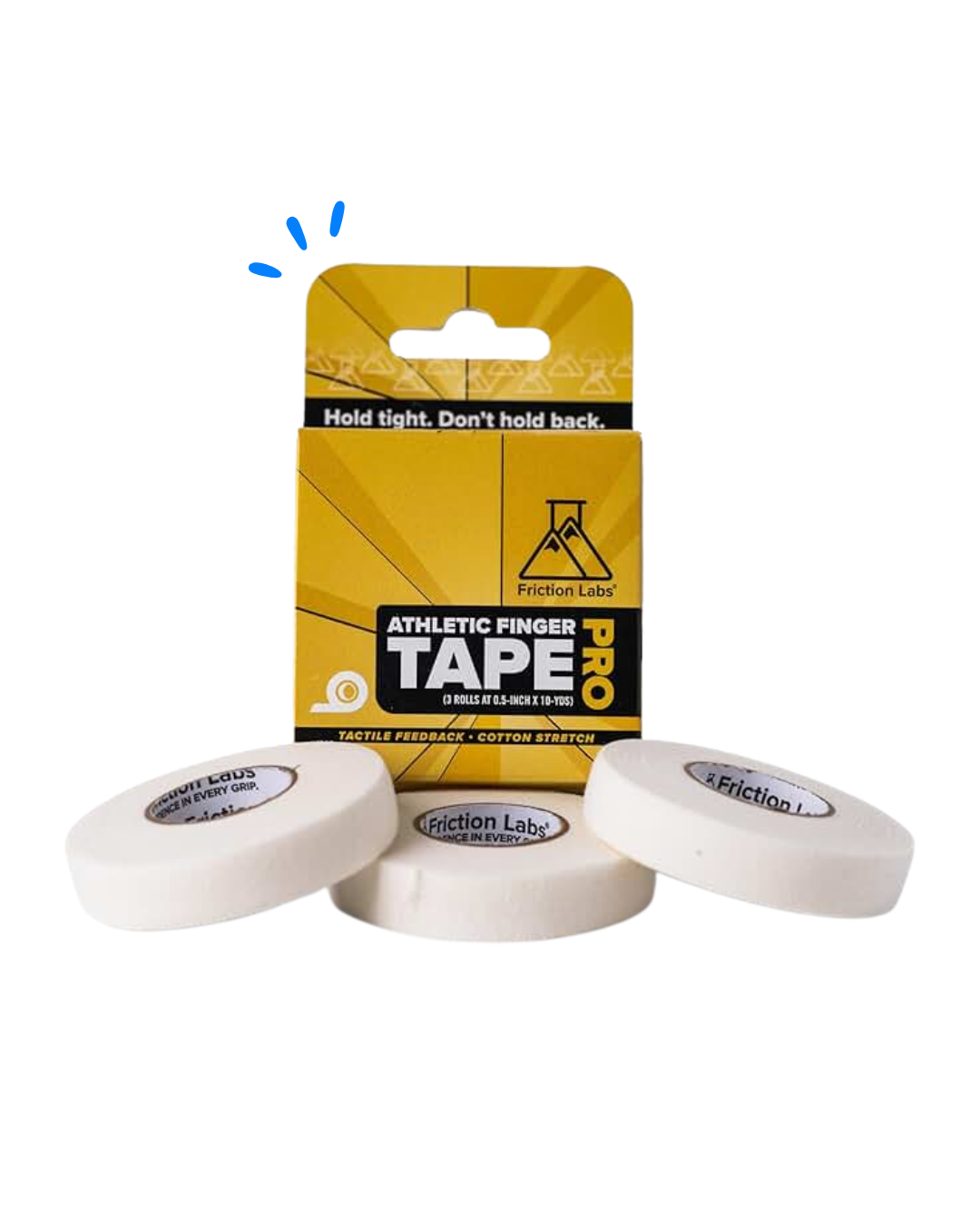
- Long lasting adhesive
- Durable cotton construction
- Easy to tear by hand
- Leaves minimal sticky residue
Metolius Climbing Tape
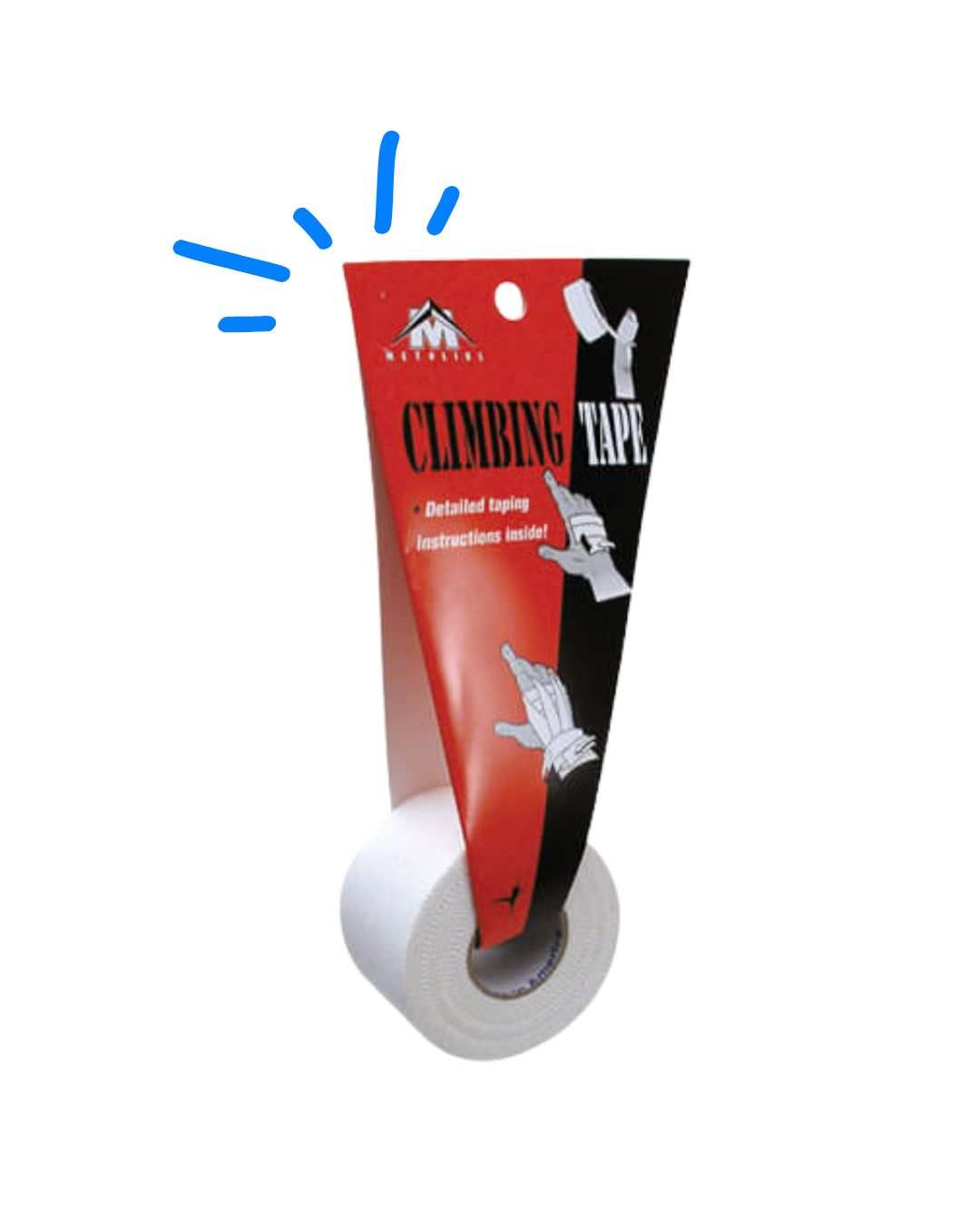
- Affordable
- Strong adhesion
- Available in multiple widths
- Trusted by climbers for decades
KT Tape Pro
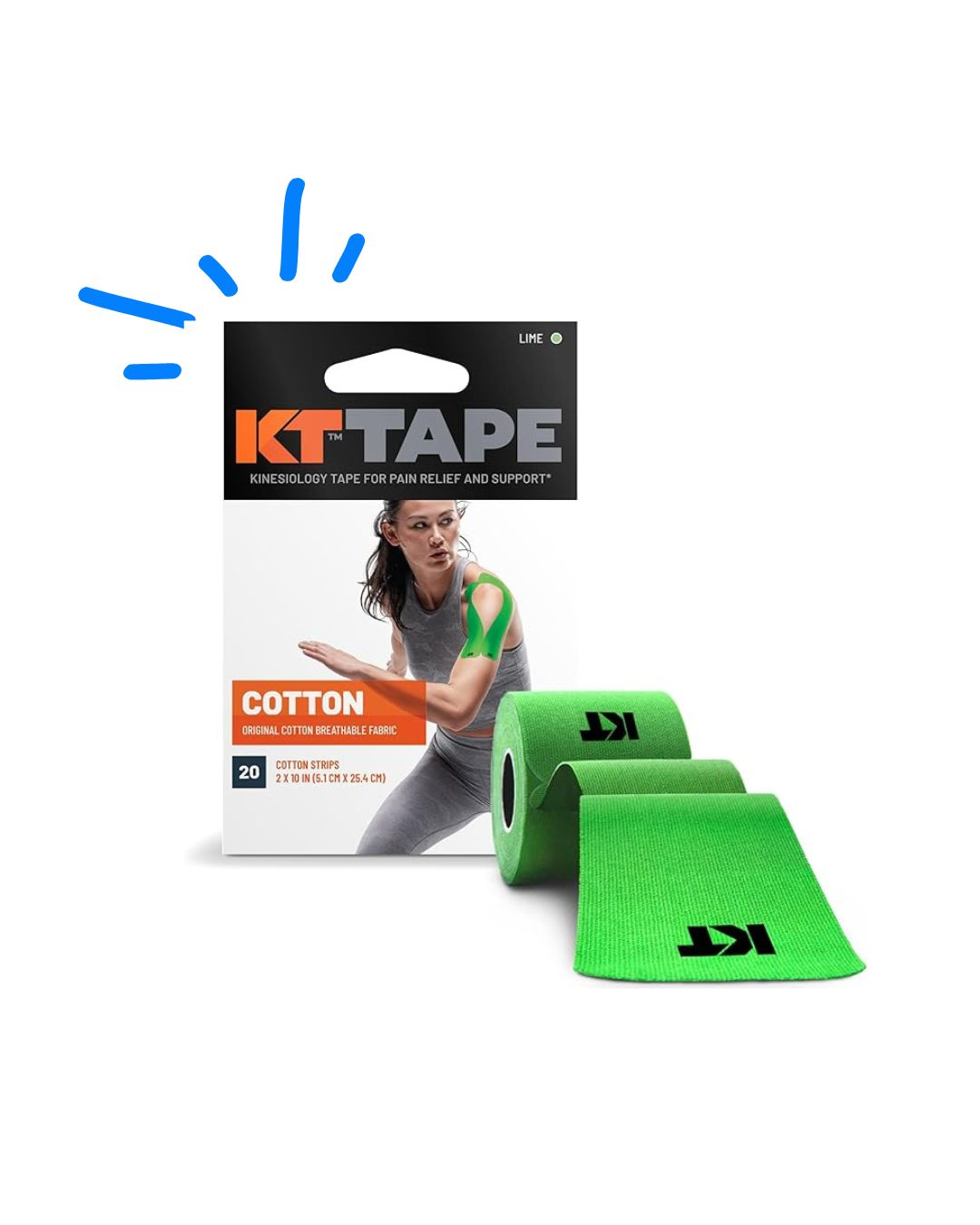
- Waterproof synthetic material
- Lasts several days
- Strong adhesive
- Available in numerous colors and patterns
SpiderTech Pre-Cut Tape

- Pre-cut designs
- Easy application
- No trimming required
- Good for climbers new to kinesiology tape

You May Also Like